


It should come as no surprise to note that importing women’s garment & fashion products from china is one of the most popular categories for retailers from India. After all, no woman garment and fashion will ever say that she has enough clothes. The fashion industry for women is estimated to be worth more than 600 billion dollars and employs more people than some of the other leading industries worldwide. This value is constantly growing to keep up with women empowerment and the evolution of fashion trends.
As the number of working women increases, so does their buying power for clothes. According to the World Bank, women currently account for 39% of the workforce. Women aren’t looking only for comfort, they’re also looking for stylish clothes that project a certain image. From the fabric selected to the pattern, the cut and the trims, the clothes a woman wears tells a story about who they are both professionally and personally.
There’s also the influence of the internet to be considered. The World Wide Web has brought emerging fashion trends from all corners of the world to a shopper’s fingertips. Celebrities and social media influencers educate women about how to personalize the top trends and make them their own.
Better connectivity and transportation networks have made fashion more accessible and affordable. Instead of being limited to their geographical location, manufacturers and retailers can now bring their clothes to the shoppers instead of waiting for shoppers to reach them. In light of this, if you’re looking at getting into the fashion retail sector, you need to find the best source for your product range. You need manufacturers who value quality and yet price their products well. In light of this, China emerges as a great place to start.

China has long been known for its mass production capabilities. Manufacturers in the country produce everything from fabrics to trims and the finished garments. Clothing manufacturers are spread out across China but some of the largest manufacturing hubs are centered on Guangdong, Jiangxi, Fujian, Zhejiang and Jiangsu. Most of these manufacturers take on orders on demand and hold very little stock. Chinese garment manufacturers work with many well-known international brands and hence are well versed with the current trends. It would be difficult to approximate the cost of manufacturing clothes in China. The cost of buyer would depend on multiple variables such as material, designs, production timeline, logistics, etc.
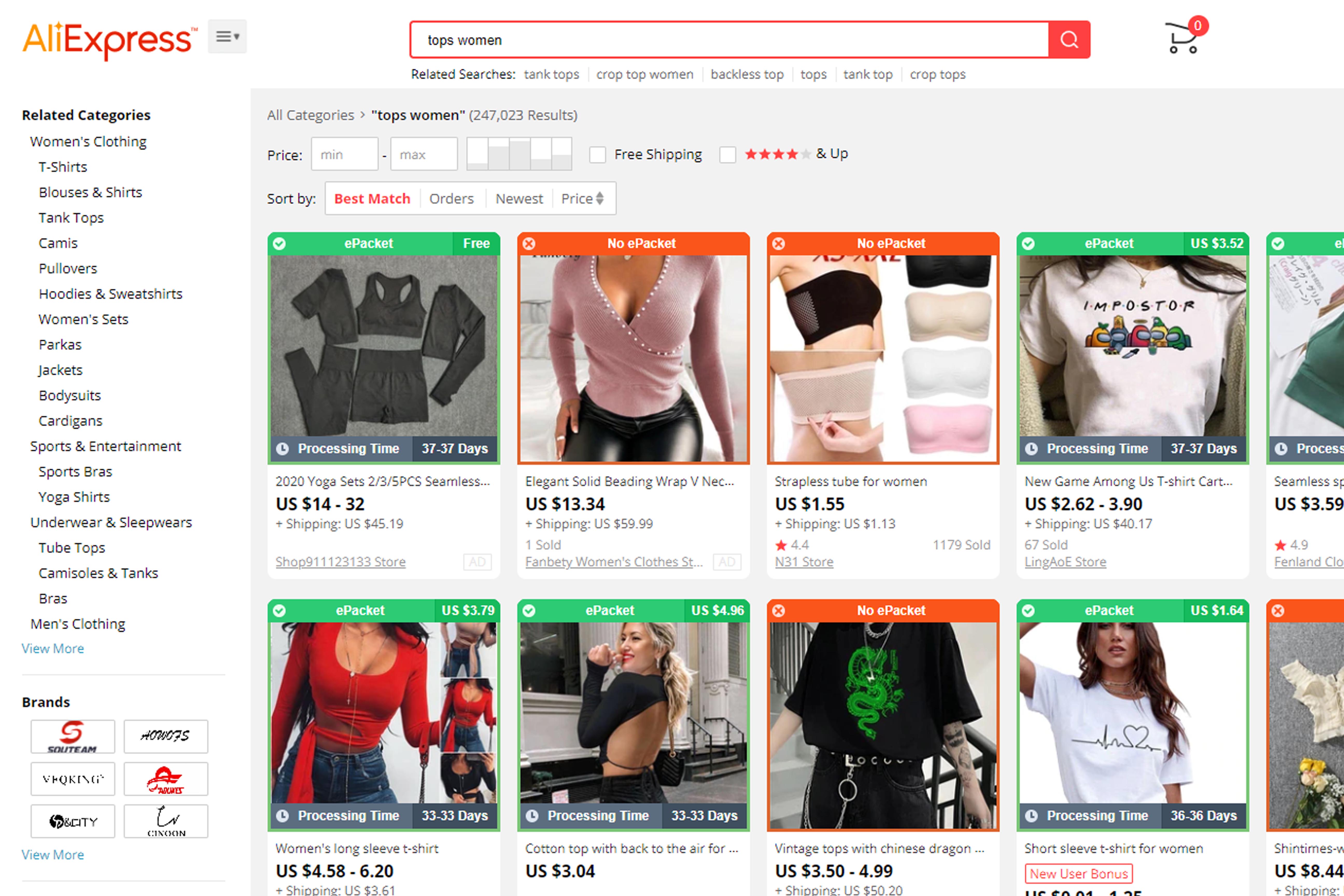
Tops and t-shirts are versatile and hence the most popular category for women’s fashion. This category of women’s clothing falls into various sub-categories such as office wear, casual clothing, athleisure, party wear, etc. The list of styles is virtually endless – manufacturers make everything from crop tops and racer back t-shirts to off-shoulder club wear tops. These designs range from the simple t-shirt a woman may want to wear for a morning workout or a college lecture to ruffled tops for Sunday brunches.
The second most popular category for women’s garments is jackets and coats. This refers mostly to winter wear but does not exclude light summer and fall jackets. One of the reasons for the growing popularity of this sector is because women now travel a lot more than they did earlier. Whether you’re talking about a trip to Gulmarg or Switzerland, women are now travelling alone as well as in groups. Thus, though a large part of India does not see a harsh winter, jackets and coats are selling all over the country. Chinese garment manufacturers offer a wide variety of designs and styles ranging from fur lined jackets and down jackets to cropped and full-length coats.
While tops and tees are considered casual, blouses and shirts have a more professional appeal to them. These garments are popular amongst working women who need to project themselves at work. We’re not looking at cropped tops here. In this category, we’re talking about button down, collared shirts with cuffed sleeves or roll back sleeves, peasant blouses, etc. With reference to fabrics, the choice is typically between solids, stripes, with intricate abstract or geometric patterns and small polka dots.
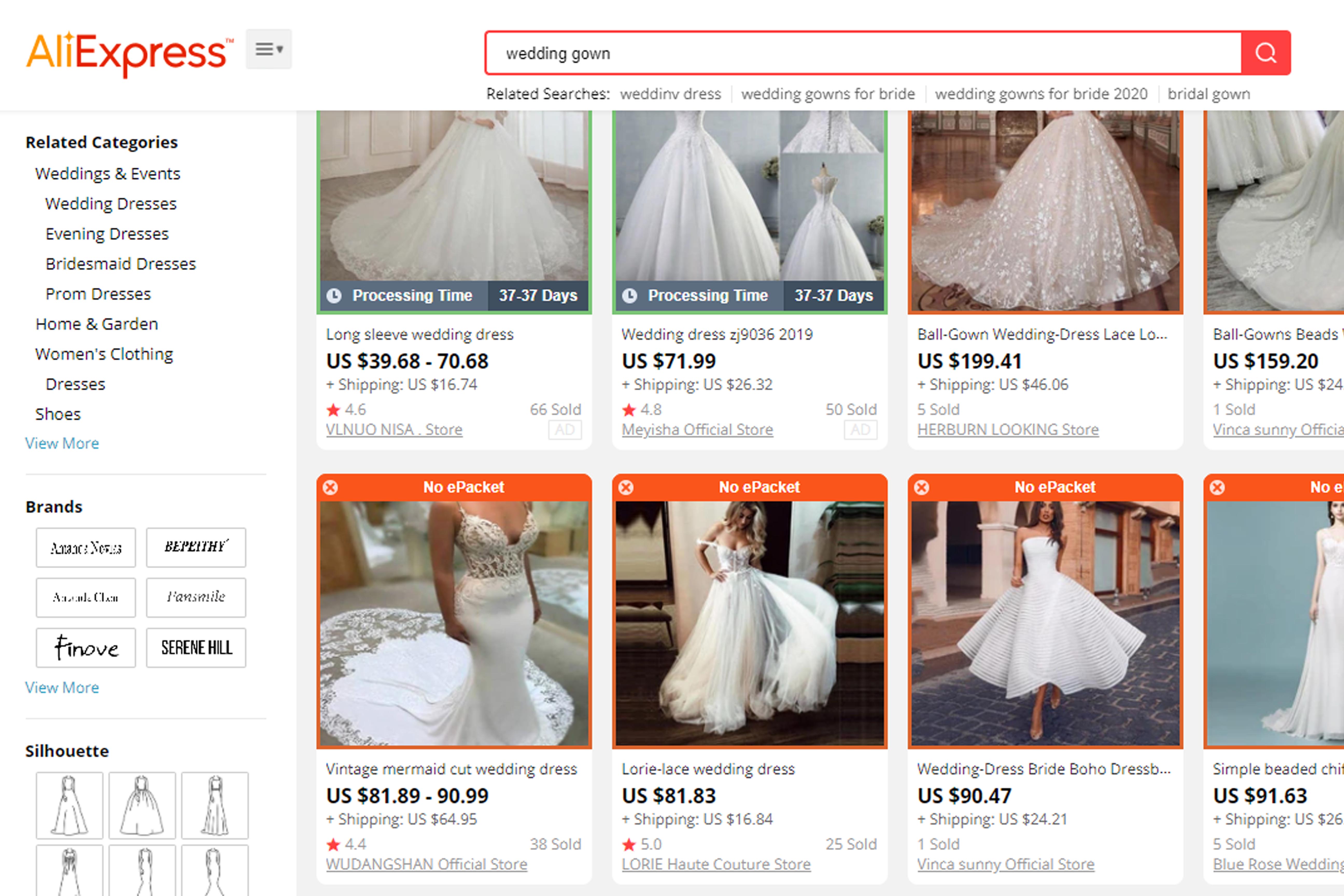
When you think of Indian weddings, a lehenga or saree is usually the first garment to come to mind. But, there are a growing number of court and church weddings being conducted here too. Indian manufacturers are still not considered experts on wedding gowns. The market in India for wedding gowns is the second largest wedding market in the world. This makes wedding gowns an excellent choice for garment retailers. It’s a niche segment but a growing one and a sector with immense potential for growth. If you’re looking for wedding gowns, Chinese manufacturers offer fishtail gowns, ball gowns, mermaid gowns and all the latest styles.
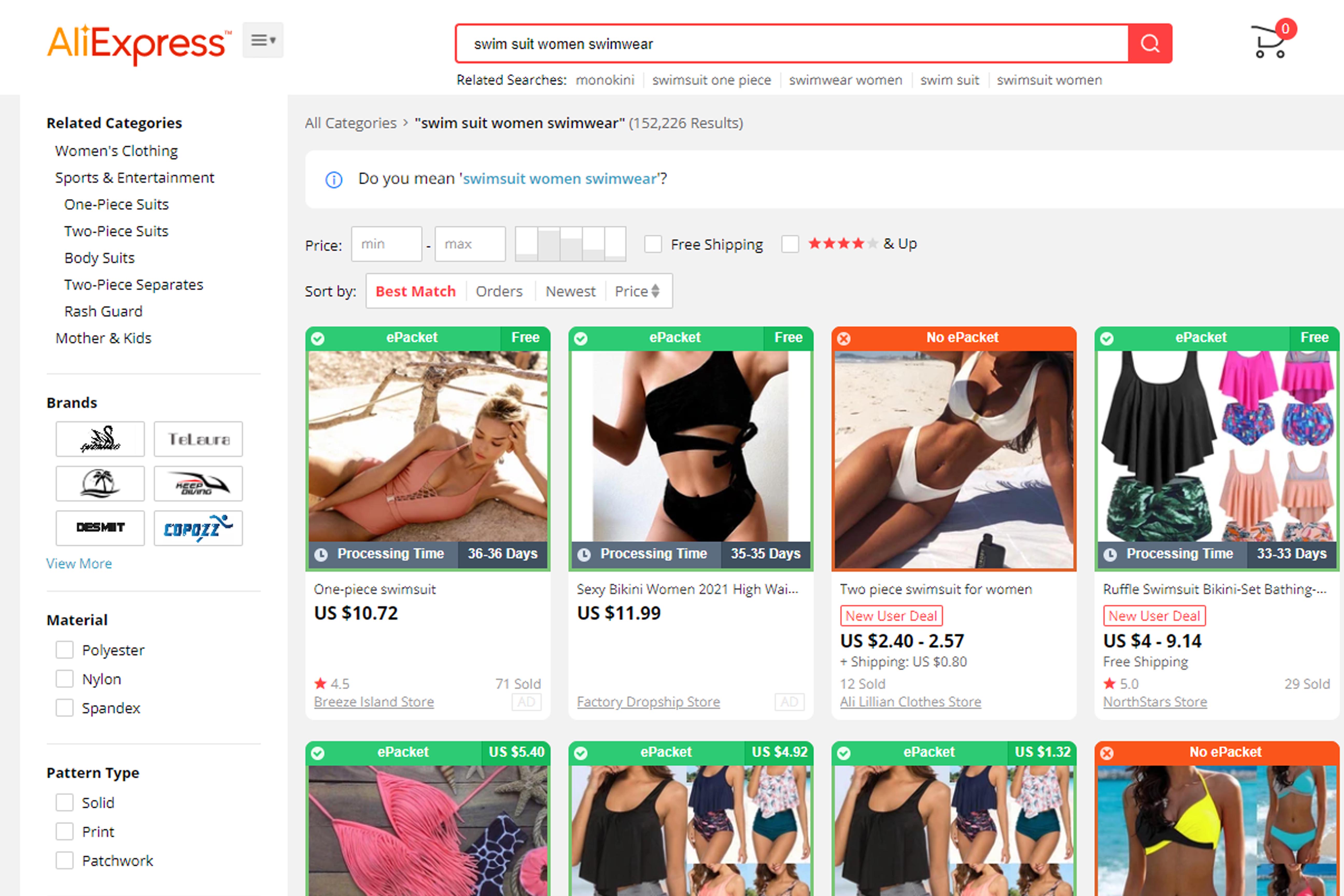
Just as the sales for jackets and coats is growing so is the sales for swim suits. A swimming pool is now quite common in most high-end residential societies. There’s also the growing popularity of beach spots as holiday destinations for women. In addition, when women who want to take a break with a weekend staycation when they can’t get out of town look at hotels, a swimming pool is one of their main prerequisites. Swimsuit manufacturers from China offer a large variety of styles from one-piece swimsuits to bikinis, tankinis and cover-ups.
The last category to consider is pants and capris. Sales have been increasing for all types of casual and formal pants. We’re seeing an increase in sales numbers for solid as well as patterned pants. While capris are a popular choice for college going girls and young working professionals, ankle or full-length pants are more popular with women employed at managerial positions.
Once you know the type of clothing you want to sell and you need to find a manufacturer to work with. You need a supplier who specializes in your product category. for example, if you’re looking at getting into the swimsuit market, you don’t want to work with a supplier for pants! When you’re shortlisting manufacturers, look at their product scope and work they’ve done in the past. This should give you an idea of their capabilities and quality measures. You also need to look at technical capabilities. For example, if you’re looking at retailing DTG printed tops, you need to make sure that the manufacturers who choose to work with excels in this type of printing.
You will also need to confirm the minimum order quantity requirements. Most manufacturers ask for a MOQ of 500-1000 pieces per order. In the case of colours and fabrics, the MOQ is typically 250-500 pieces and in the case of sizes, you would need to order at least 100-250 pieces per size. Some manufacturers will work with you to reduce the overall MOQ by using the same colours and fabrics for multiple SKUs.
Your techpack must meet a number of specifications such as detailed design sketches and drawings, sewing pattern, a bill of materials, size chart with reference to ISO size standards, seam allowances, tolerances, printing techniques to be used, material specifications, colours, labels, etc. Branding needs must be specific. For example, you need to specify where your labels are to be attached, what size they must be, the colour combinations permitted, etc. You may also need to mention test reports required for restricted materials such as mercury, formaldehyde, etc. Many of the smaller Chinese manufacturers may be unaware of the substance contained in the fabrics they work with.
Once your techpack is complete and shared with the manufacturer, you need to get samples made. The aim here is to confirm your choices for materials and design as well as test the manufacturer’s capabilities and eye for detail. You would ideally need samples of only 1 or 2 sizes per SKU. Once you confirm your order, this will be the main point of reference. Hence, don’t skip out on any of the details.
For the sampling stage, you would have probably worked with more than one manufacturer. After you get your samples, you should be able to finalize your manufacturer. Now is when you would need to make a production manual. Keep your order volumes to minimum amounts and place your first order. Your production manual would need to include the techpack, compliance requirements, packaging, payment and shipping terms, quality control terms and brand usage. This manual will help standardize production and the process to be followed. You may also want to put in clauses for delays in production and quality related issues.
Issues with quality are bound to arise. If you want to build a trustworthy brand, you must pay attention to production quality. Some garments may need to be rejected completely because of a quality issue while other issues may be fixable. Some of the issues to look out for include:
Quality inspections must be conducted at multiple stages of production.
Once your garments are ready and have passed the quality inspection, you need to get your products shipped from China to your warehouse. First, your products need to be packed well. Garments are not perishable but if stored improperly, they can be damaged. Ideally, every piece must first be packed individually in plastic and then in inner and outer cartons. Depending on your order size, the outer cartons may be strapped to a pallet or Styrofoam frame. All cartons should also be covered with plastic to protect them from mould.
Before you can ship your goods, most manufacturers need the balance payment to be made. Thus, again, ensure that your order has passed through quality checks. You can choose to have your order shipped by sea or air depending on your timeline and your budget. After all, shipping by air may be faster but it is the more expensive choice. OyeExpress is the ideal shipping and logistics partner for women’s fashion retailers importing garments from china to India.
When you’re looking for logistics partners, OyeExpress is the name that stands out. The logistics services offered by OyeExpress take care of all the aspects of setting up a manufacturing connection in China. From finding manufacturers to meeting with them to get the best rates, providing secure payment channels, conducting quality checks and shipping the order from China to India, OyeExpress offers help with every stage of the process.
OyeExpress is known to be dependable and offers the best rates for shipping from China to India. They offer door to door service that helps you bypass customs hurdles and ensures that your delivery schedule is always met.
Instead of looking for negotiating with multiple logistics firms to get quotes and reviews, you can simply download the OyeExpress app, enter the required details and let the app locate the best logistics company for your requirement. With the OyeExpress network of logistics providers, you will always be assured of a professional and efficient experience.
As we said in the beginning, no woman will ever claim to have enough clothes. Thus, if you choose to get into the women’s garment retail sector, you will not find it difficult to find a market for your wares. You can choose to retail an assortment of women’s garments or limit yourself to a niche segment. For example, wedding gowns are typically considered a niche and most gown retailers do not let their brand be associated with other types of garments such as swimsuits or office wear. So, have you decided what segment your brand will be known for?

We are one-stop solutions for all your sourcing and shipping needs from China.We can source on behalf of you and ship the same to your doorstep.
701, JEEVAN HEIGHTS, BUNDER PAKHADI ROAD, KANDIVALI WEST, OPP ORCHID SUBURBIA, Mumbai City, Maharashtra, 400067
Ms Rekha - +91 90041 19917
Shaleen Kothari - +91 86522 21231
Email - kailesh@oyeexpress.com
Phone - +91 88797 15050
Download Our logistics
App Get live quotes and track your shipments.

